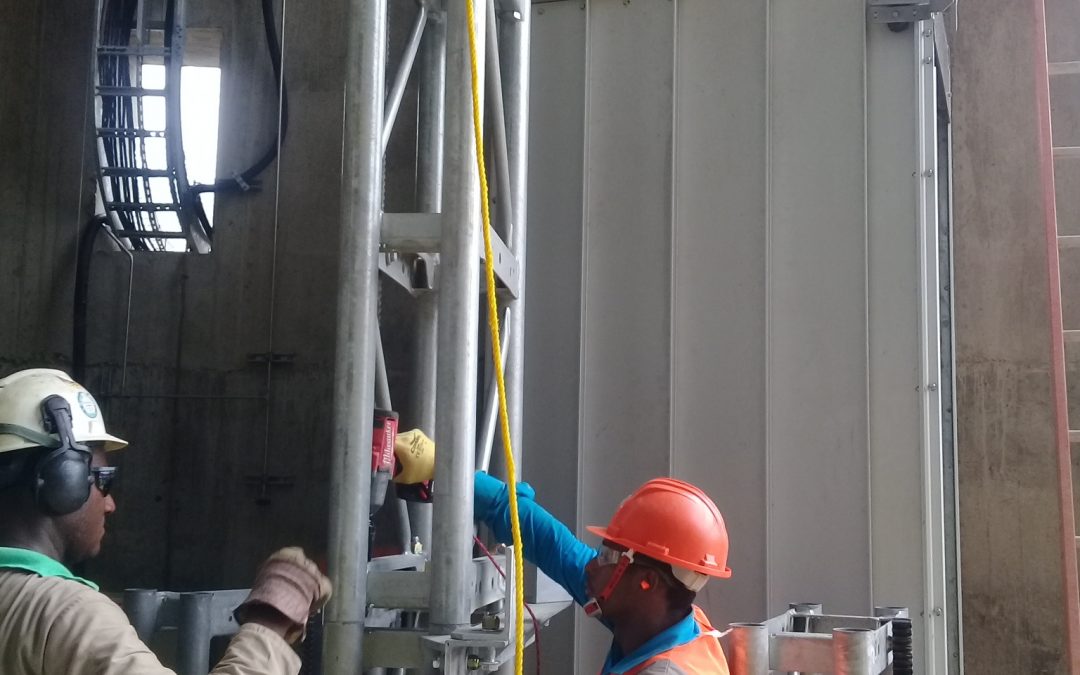
An unplanned shutdown of your Alimak elevator in the middle of a critical workday. The cost? Thousands of dollars in lost man-hours, materials that don’t reach their destination, schedule delays, and most importantly, your project’s credibility is on the line. For any construction or plant manager in the Caribbean, this is an operational nightmare.
Many see maintenance as an expense in the expenditure column. Industry leaders, however, understand the truth: a preventive maintenance plan (PMP) for your Alimak elevators is not a cost; it is one of the most profitable investments you can make.
This practical guide distills industry best practices and maintenance principles for high-performance equipment, showing you how to transform your approach from “reactive” to “strategic” and ensure maximum productivity, safety, and a measurable return on investment (ROI).
Why is “reactive” maintenance the worst business decision?
The reactive approach—”fix it when it breaks”—is a losing bet in the demanding Caribbean industrial sector. A catastrophic failure doesn’t just involve the cost of the repair itself; that cost multiplies exponentially due to factors often left out of the budget:
- Cost of downtime: This is the highest and most devastating cost. Every hour the elevator is out of service, the construction site or plant slows down or comes to a complete halt.
- Collateral damage: A failure in one component (like a worn-out brake) can cause a chain reaction, damaging much more expensive systems like the motor, rack, or the structure itself.
- Emergency costs: An emergency repair is always more expensive than a scheduled one. It involves rush fees, potential surcharges on imported parts, and hurried logistics.
- Safety risks: Equipment that fails unexpectedly is an unacceptable safety hazard.
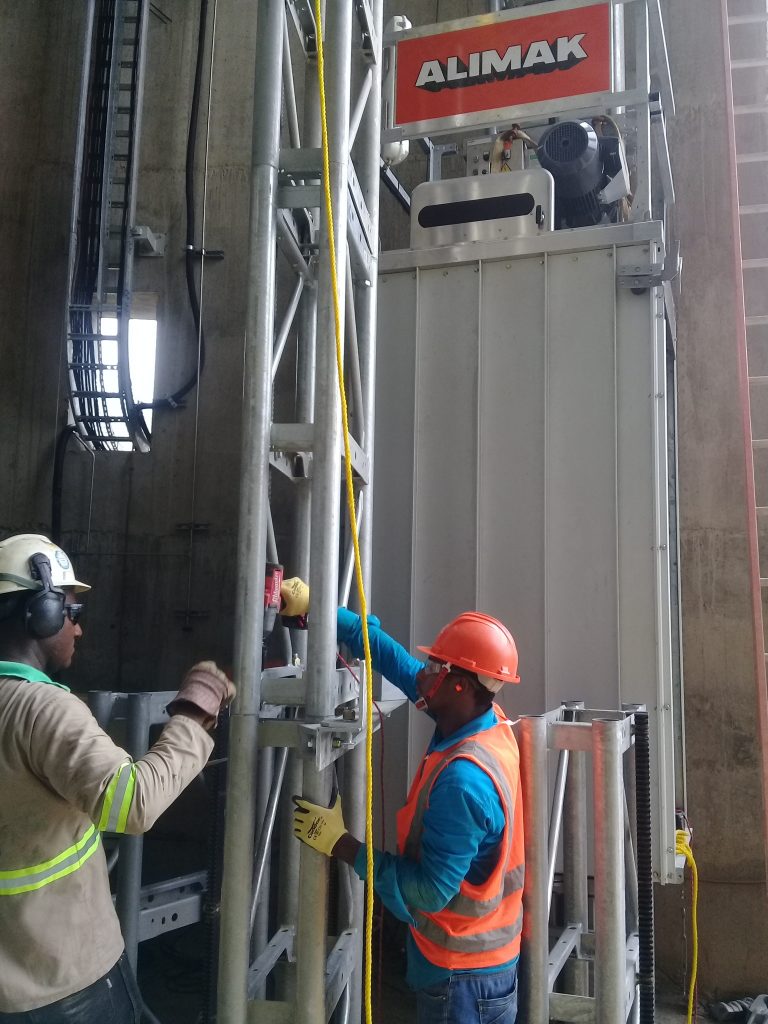
The financial and operational difference between a proactive and a reactive approach is overwhelming, as summarized in this table:
| Feature | Preventive plan (PMP) | Reactive approach (“firefighting”) |
| Costs | Planned and predictable. | Unpredictable and 3 to 5 times higher. |
| Downtime | Minimal and scheduled. | Extensive and at the worst possible time. |
| Productivity | Maximum. Continuity guaranteed. | None. Project or plant paralyzed. |
| Safety | Controlled and minimized risk. | Maximum risk, with potential for accidents. |
| Lifespan | Extends beyond expectations. | Drastically shortened. |
| ROI | Maximized. Protects and profits from the asset. | Destroyed. Turns an asset into a liability. |
The 4 pillars of ROI from professional preventive maintenance
A maintenance plan executed by certified specialists pays for itself. Here’s why:
1. Maximizing uptime
By identifying and correcting small issues before they become major failures, you ensure continuous and predictable operations. A reliable elevator means a steady workflow and projects delivered on time—a critical factor in the competitive Caribbean construction market.
2. Extending the asset’s lifespan
An Alimak elevator is a significant capital investment. Regular maintenance, proper lubrication, and component adjustments, as dictated by manufacturer standards, can extend the equipment’s useful life for years, protecting its value and postponing the need for a costly replacement.
3. Safety and regulatory compliance
Periodic inspections guarantee that all safety components—from the braking system to the overspeed safety device—are functioning perfectly. This not only saves lives but ensures compliance with international safety standards like OSHA guidelines and protects the company from legal liability.
4. Increasing resale value
An elevator with a complete and documented maintenance history, performed by an authorized service provider like Bridge 360, has a significantly higher resale value. It is tangible proof that the asset has been professionally cared for.
The definitive preventive maintenance checklist for your Alimak
This plan is divided by frequency and must be executed by personnel with the appropriate level of qualification.
| Frequency | Performed by | Key inspection & maintenance tasks |
| Daily | Certified Operator | Inspection of doors and safety locks, general cleaning of the car and landings, call station checks, and lighting checks. |
| Monthly | Qualified Technician | Lubrication of guides and rollers, checking cable tension, visual inspection of brakes, and detailed inspection of all guide rollers. |
| Quarterly | Qualified Technician | Includes checking the emergency stop system, reviewing all bolts and anchors, and a communication system check. |
| Annually | Certified Specialist | Includes verification of gearbox oil, testing the safety device, non-destructive structural review for hidden defects, a full motor/gearbox overhaul, load test, and motor coil insulation test. |
Adapting the plan to Caribbean conditions
It is crucial to understand that a standard manual’s plan is not always enough. Local conditions demand expert adaptation. Projects face unique challenges, whether it’s a resort in Montego Bay, Jamaica, a luxury villa on the Platinum Coast of Barbados, or an industrial plant near Port of Spain, Trinidad. These high-salinity and dusty environments all require more rigorous inspection and corrosion protection. Our maintenance plans are tailored to account for these variables, offering real protection adapted to your environment.
The Caribbean Advantage: Why Your Maintenance Partner’s Location Matters
For industrial and construction projects in the Caribbean, sourcing equipment is only half the battle. When it comes to maintenance and emergency support, relying on providers from the US or Europe often leads to critical operational failures:
- Delayed Response Times: Waiting for a technician to travel internationally can mean days or even weeks of costly downtime.
- High Costs: Mobilization fees, travel, and accommodation for international technicians significantly inflate maintenance costs.
- Low Priority: For many overseas suppliers, the Caribbean is not a primary market, meaning your urgent needs may not be their top priority.
This is where Bridge360 offers a decisive advantage. We are not a distant supplier; we are a Caribbean company. Our team is based in the region, ensuring rapid response times and a deep understanding of local operational realities
Frequently asked questions (FAQs)
How often should major maintenance be performed on an Alimak?
The annual inspection, which includes testing the safety device and performing load tests, is considered the major maintenance and is critical. It must be performed by a manufacturer-certified specialist.
Can a non-certified technician service my Alimak equipment?
It is a very high risk. A non-certified technician may not know the exact specifications, may use non-original spare parts, or may lack the proper diagnostic tools, which could void the equipment’s warranty and, even worse, compromise its safety.
What does a preventive maintenance contract with Bridge 360 include?
Our plans include all scheduled inspections, labor by certified technicians, detailed reports on the status of your equipment, and proactive recommendations. You can learn more about our solutions on our elevator installation and maintenance page.
How does poor maintenance affect the Alimak warranty?
The use of non-original spare parts or the failure to follow the manufacturer’s recommended maintenance plan are the most common causes for voiding the warranty.
Is a preventive maintenance plan very expensive?
Compared to the cost of a single production shutdown, damage to your reputation, or worse, an accident, the cost of a PMP is marginal. It is a direct investment in the profitability and sustainability of your operation.
Conclusion: Your Alimak is a productivity machine
Treating your Alimak elevator as the high-performance asset it is requires a professional and proactive approach. A well-executed preventive maintenance plan is the only way to ensure your investment continues to generate productivity and profit safely and reliably throughout its entire lifespan.
Your Alimak elevator is a world-class investment. Don’t leave it in the hands of generalists. Secure its performance and protect your ROI with a team in the Caribbean that matches the quality of your equipment.